Rider arrives
Stage plots and technical documents enter the event without losing their source or version.
02 / AI / 3D WEB / VENUE OPERATIONS
Explore Salon İKSV in 3D, turn a technical rider into a reviewable stage, and bring artists and venue teams into the same preparation workflow.
LIVE VENUE PILOT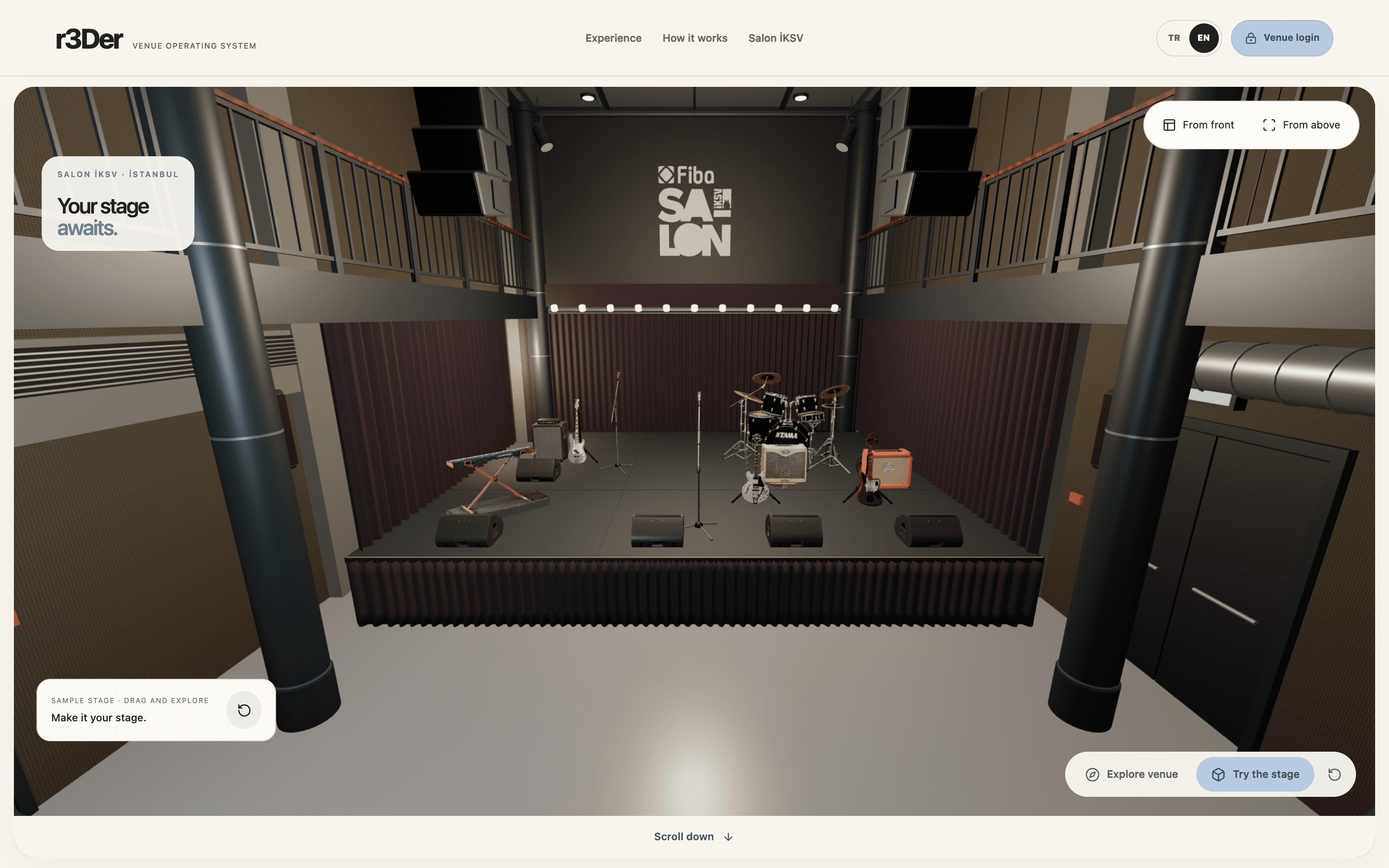
Product design and full-stack engineering
Next.js · TypeScript · React Three Fiber · FastAPI
Three.js · venue GLB assets · deterministic placement
Salon İKSV · interactive venue tour · 7.3 × 6 m web stage
THE OPERATING LOOP
The latest r3Der experience connects an interactive Salon İKSV venue tour with rider-to-stage preparation. Visitors enter the modelled venue, explore the space, and try an equipment-filled sample stage. Behind that public experience, artists and technicians review real riders, make constrained placement adjustments, and keep revisions and approvals attached to the event.
Open the live r3Der product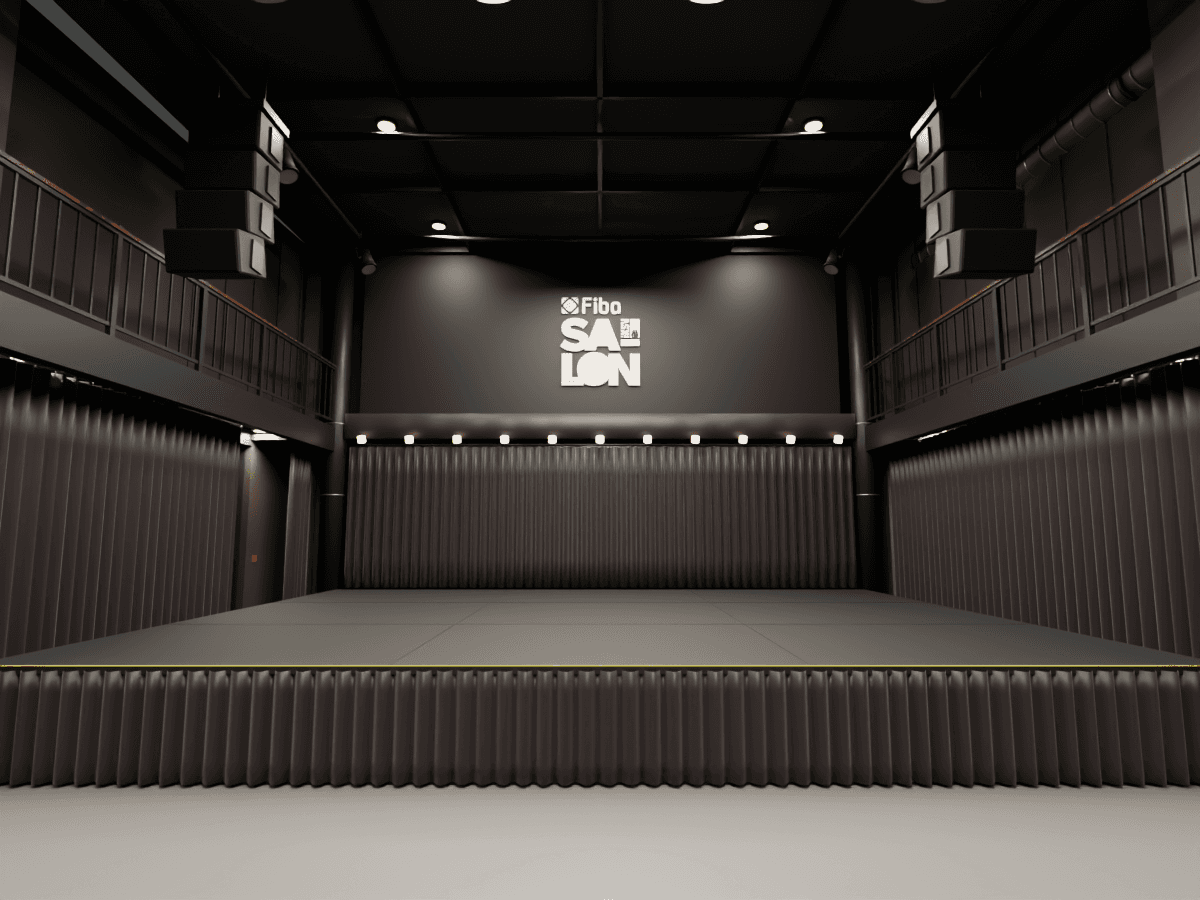
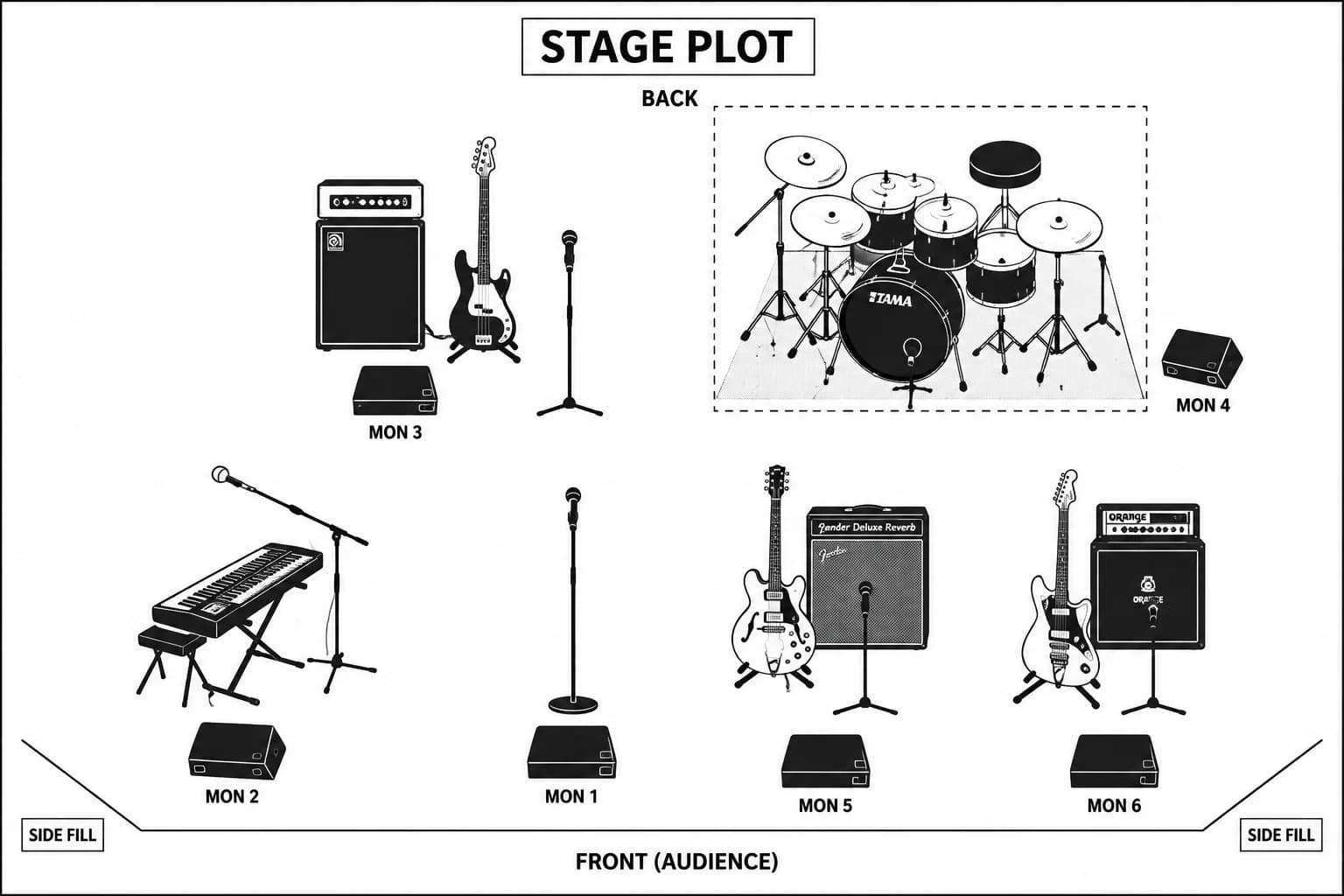
Stage plots and technical documents enter the event without losing their source or version.
Equipment is identified, matched to the venue catalog, and placed on the real stage dimensions.
Artist and venue see the same scene through interfaces shaped around their own decisions.
Notes, adjustments, and approvals remain visible as a technical history of the event.
A focused surface for sending a rider and making small placement corrections—without exposing the venue’s internal system.
Documents, equipment matches, input channels, generation history, and technical decisions stay together under the event.
VENUE MOBILE COMPANION
The branded Expo client brings the live r3Der venue workflow onto iPhone and Android for on-site testing. It keeps the venue session, supports rider file uploads, and recovers cleanly from connection or mobile WebGL interruptions.
 r3DerSalon İKSV · Teknik Operasyon
SELECTED ENGINEERING
Gemini extracts equipment, input channels, orientation, and semantic grid cells. The extraction contract rejects XYZ coordinates and catalog IDs outside the venue inventory.
A separate domain engine owns asset matching and world placement, keeping objects inside the calibrated stage while reporting overlaps, restrictions, and uncertain matches.
Riders, generated scenes, corrections, notes, and approvals stay attached to the event, with focused interfaces for artists and venue technicians.